


BIM, Digital Twin
BIM and Digital Twins in Dubai and the Middle East: The Future of AEC and Building Automation
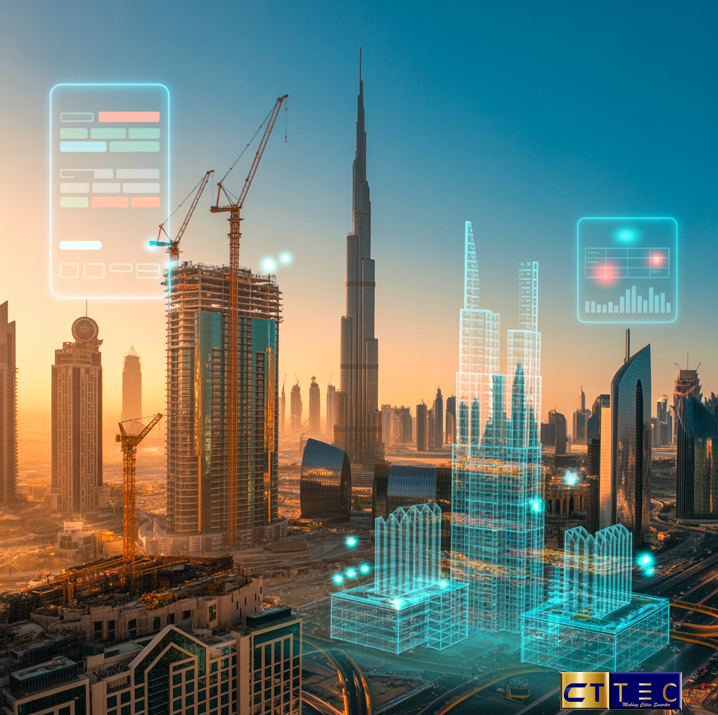
Introduction: BIM as the Foundation of Smart Construction
The AEC industry in Dubai, UAE, and the Middle East is undergoing a digital revolution. From design to operations, Building Information Modelling (BIM) has become the backbone of construction projects, delivering accuracy, cost savings, and efficiency.
But BIM is just the beginning. The next frontier is Digital Twin technology, powered by building automation, industrial automation, IoT, and AI. Together, these innovations are reshaping how Dubai builds, manages, and sustains its infrastructure in alignment with Dubai Vision 2030.
BIM Adoption in Dubai and the Middle East
Dubai Municipality accelerated BIM usage with Circular No. 207 (2015), mandating BIM for large-scale and complex projects such as:
- High-rise towers above 40 floors
- Buildings over 300,000 sq. ft.
- Specialist projects like hospitals and universities
This regulation set the stage for widespread BIM adoption, making Dubai one of the first cities in the Middle East to push BIM into mainstream project delivery.
Across the region, BIM is now standard for:
- 3D design coordination to avoid clashes
- 4D sequencing to optimize scheduling
- Asset tagging (COBie) for Facility Management (FM)
- Integration with GIS platforms for planning approvals
By 2030, the Middle East BIM market is projected to grow steadily at 7–8% CAGR, reflecting strong demand from mega-projects and smart city initiatives.
From BIM to Digital Twins
While BIM provides a static design model, Digital Twins add dynamic, real-time capabilities by integrating IoT sensors, automation, and AI.
Examples in Dubai include:
- Expo 2020 Dubai Digital Twin – Powered by Siemens, it monitored live building operations, energy use, and safety across the entire expo site.
- Dubai Here (Municipality GIS Center) – A 2D/3D mapping portal forming the foundation for a citywide Digital Twin, combining BIM, CAD, and geospatial data.
- Dubai RTA Road Asset Twin – Using LiDAR and predictive analytics, it improved productivity in road maintenance by up to 300%.
- Museum of the Future – A parametric/BIM-driven marvel showcasing how design data enables lifecycle operations.
The Role of Building and Industrial Automation
Building Automation Systems (BAS)
Modern Dubai skyscrapers and commercial complexes use automation systems to control HVAC, lighting, fire safety, and security. When connected to a Digital Twin, BAS enables:
- Real-time monitoring of energy and comfort levels
- Adaptive controls based on occupancy
- Predictive maintenance of HVAC and electrical systems
Industrial Automation
Industrial plants, district cooling, and utility providers like DEWA use IoT-enabled SCADA systems within their Digital Twins to:
- Optimize production schedules
- Balance energy demand and renewable integration
- Enable predictive maintenance for critical assets
IoT and AI Integration
IoT sensors act as the “nervous system” of a Digital Twin, while AI analyzes patterns to predict failures, improve efficiency, and support autonomous building operations.
Acceptance and Uptake in the Middle East
- Clients and developers demand FM-ready models at project handover.
- Authorities use BIM and Digital Twins for faster permitting and compliance.
- Facility managers leverage automation for predictive maintenance.
The UAE’s AI Strategy 2031 and Dubai Metaverse Strategy reinforce the need for Digital Twin data pipelines, ensuring all sectors—from construction to operations—embrace digitization.
Impact on Dubai Vision 2030
1. Sustainability & Net Zero
- Real-time carbon tracking
- Automated HVAC optimization
- Efficient water and energy use in line with UAE Net Zero 2050 goals
2. Smart Economy
- Reduced lifecycle costs through predictive maintenance
- Automation-driven efficiency in logistics, utilities, and real estate
- New service-based business models
3. Citizen-Centric Services
- Safer, healthier indoor environments
- Reliable public transport and utilities
- Transparent data for urban planning
What’s Next in the Next 5 Years?
- Twin-Ready Standards – Every new Dubai project will deliver Digital Twin-ready BIM models.
- Predictive FM – AI-powered predictive maintenance across HVAC, transport, and utilities.
- Citywide Twins – Dubai Here platform integrating geospatial, BIM, and live asset data.
- Carbon Dashboards – Sustainability reporting as a standard deliverable.
- Workforce Upskilling – FM and AEC professionals trained in data management, not just design.
Reference Projects
- Dubai Municipality BIM Mandate (Circular 207, 2015)
- Expo 2020 Dubai Digital Twin (Siemens)
- Dubai Here – City GIS/Digital Twin Platform
- RTA Road Asset Digital Twin with LiDAR
- Museum of the Future (BIM/parametric design)
- Dubai Metro Route 2020 (BIM-enabled coordination)
Conclusion: The Road Ahead
BIM is now the baseline in Dubai. The future lies in Digital Twins powered by automation, IoT, and AI. These technologies reduce costs, optimize energy, enable predictive maintenance, and make Dubai’s urban fabric smarter and more sustainable.
As Dubai pursues its Vision 2030 and AI 2031 strategies, Digital Twins are not optional—they are the operating system for the built environment.
How CTtec Helps
At CTtec, we specialize in engineering software, BIM services, training, and Digital Twin implementation across Dubai, the UAE, the UK, and India.
Whether you’re an AEC firm, government agency, or developer, our team provides:
- BIM training and support
- Custom automation & API development
- Digital Twin implementation for smart buildings and infrastructure
- Sustainability & lifecycle management solutions
Contact us today at support@CTtec.org